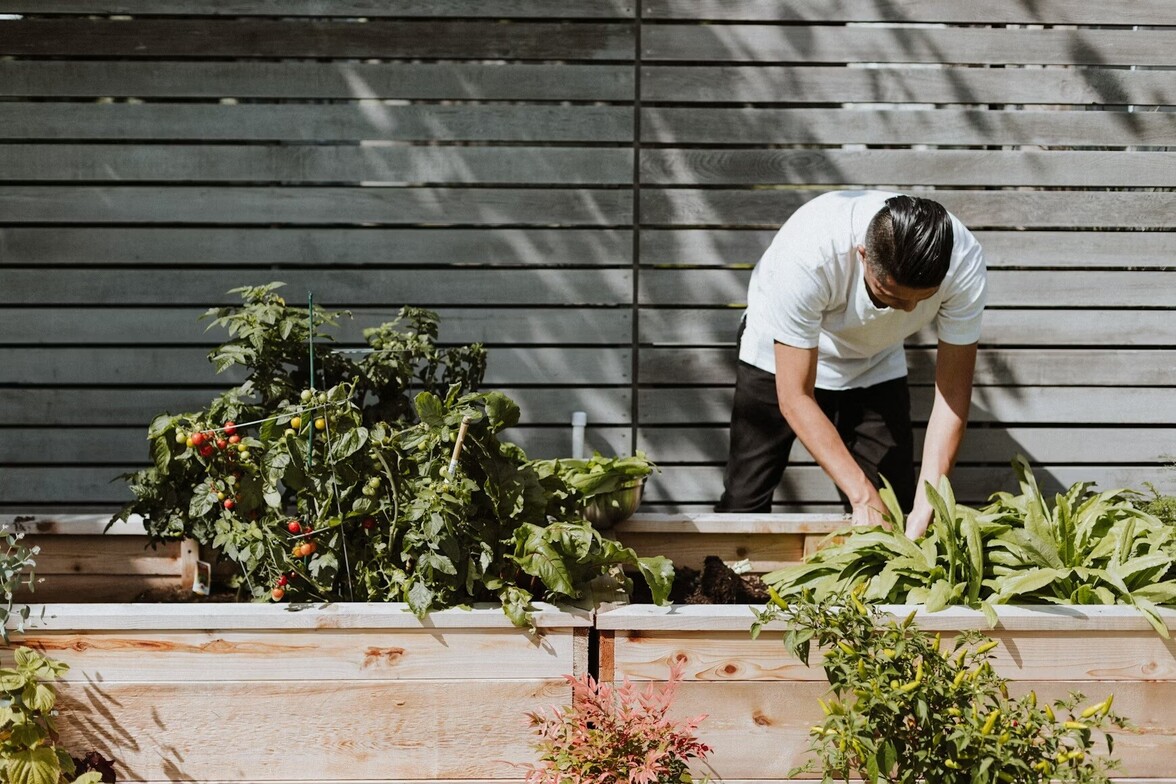
Well, it took its sweet time, but spring is finally here. Flowers are blooming, the birds are chirping, allergies are popping off… it’s time to garden. My exposure to gardening is limited to being the unpaid intern in my mom’s garden. I am, however, quite familiar with seeing a swell of gardening injuries in the clinic come late May to early June. So, I dug up a sports injury model I was introduced to in undergrad to show why gardening injuries are most common now, how to prevent them, and what to do if you’re experiencing injury now.
The Dynamic Injury Etiology model posits that injury is a result of intrinsic and extrinsic risk factors. Intrinsic risk factors are the things that make up an athlete’s current physical state like their bone and tendon strength, movement patterns and injury history (Meeuwisse et al., 2007). Intrinsic risk factors are variable; if you prep your body all winter with exercise, you lower your risk. If you are still recovering from a skiing injury, your risk factor is higher. Importantly, adaptation is possible if the exercise is within the tissue tolerance; over time that will actually push your tolerance higher. The longer exercise volume is higher than tissue tolerance, the more likely injury is to occur.
Extrinsic risk factors are all the things that are outside of an individual's body and health history that may affect their injury risk. For sports this looks like equipment, playing surface, and home or away games (Meeuwisse et al., 2007). But for an avid gardener this can mean ergonomic tools, sun exposure, and soil conditions. Crucially this can also mean the time of year; the fact that you can’t get any gardening done in winter, and the lion’s share must be done in spring, is the largest reason so many gardening injuries happen around this time. While the biggest risk factor cannot be changed, we can still augment all other risk factors to lower injury risk as much as possible.
How to manage internal and external risk
First off, take the low hanging fruit and reduce your extrinsic risk factors; use ergonomic tools and good form when gardening, protect yourself from sun exposure (your body will have an easier time healing your muscles if it doesn’t have to heal a sunburn too), try to divide the work into manageable pieces. You’re probably already doing that (I hope), so what about managing intrinsic risk?
Knowing where your injury threshold is can be tricky, especially for gardening. You’ve gone from the couch to having to do all the heavy work up front. Your body likely has some adaptation from exercise you’ve done over the winter, but it can be hard to determine how well that crosses over to gardening. A simple trick I use is rate of perceived exertion (RPE) tracking. When gardening, track how hard your gardening session was (on a scale from 1-10), and multiply it by the number of minutes that session took. This will give you a measurement called arbitrary units (AU). So if I do 60 minutes of weeding (RPE of 6) my AU would be 360.
The first week will be tricky, since you don’t have any previous data, but you can roughly estimate how much activity you’ve done in the previous couple weeks to give you something to start with. Injury is most likely to occur when your AU exceeds 150% of what it was in the previous week (Gabbett, 2016).
What to do if you’ve already gotten injured
If you’ve already sustained an injury this season, that’s ok. Like I said in the previous paragraph, finding your injury threshold can be a challenge for a seasonal activity like gardening. The most important thing to do now is see a professional to determine how severe the injury is. If you and your healthcare practitioner are confident you can safely return to gardening, work together to augment your movements and tasks to minimize the strain placed on injured tissue. The goal at this stage is keeping the stress under the re-injury threshold, and to promote healing with appropriate rest and intervention. Having a health professional in your corner is a great way of keeping you accountable to the goal of healing. Your garden will thank you.
- Gabriel Pallotto, BHSc, RMT
Reference list
Meeuwisse, W. H., Tyreman, H., Hagel, B., & Emery, C. (2007). A dynamic model of etiology in sport injury: The recursive nature of risk and causation. Clinical Journal of Sport Medicine, 17(3), 215–219. https://doi.org/10.1097/JSM.0b013e3180592a48
Gabbett, T. J. (2016). The training-injury prevention paradox: Should athletes be training smarter and harder? British Journal of Sports Medicine, 50(3), 273–280. https://doi.org/10.1136/bjsports-2016-093764
Gabriel Pallotto
Contact Me.png)
.jpg)
